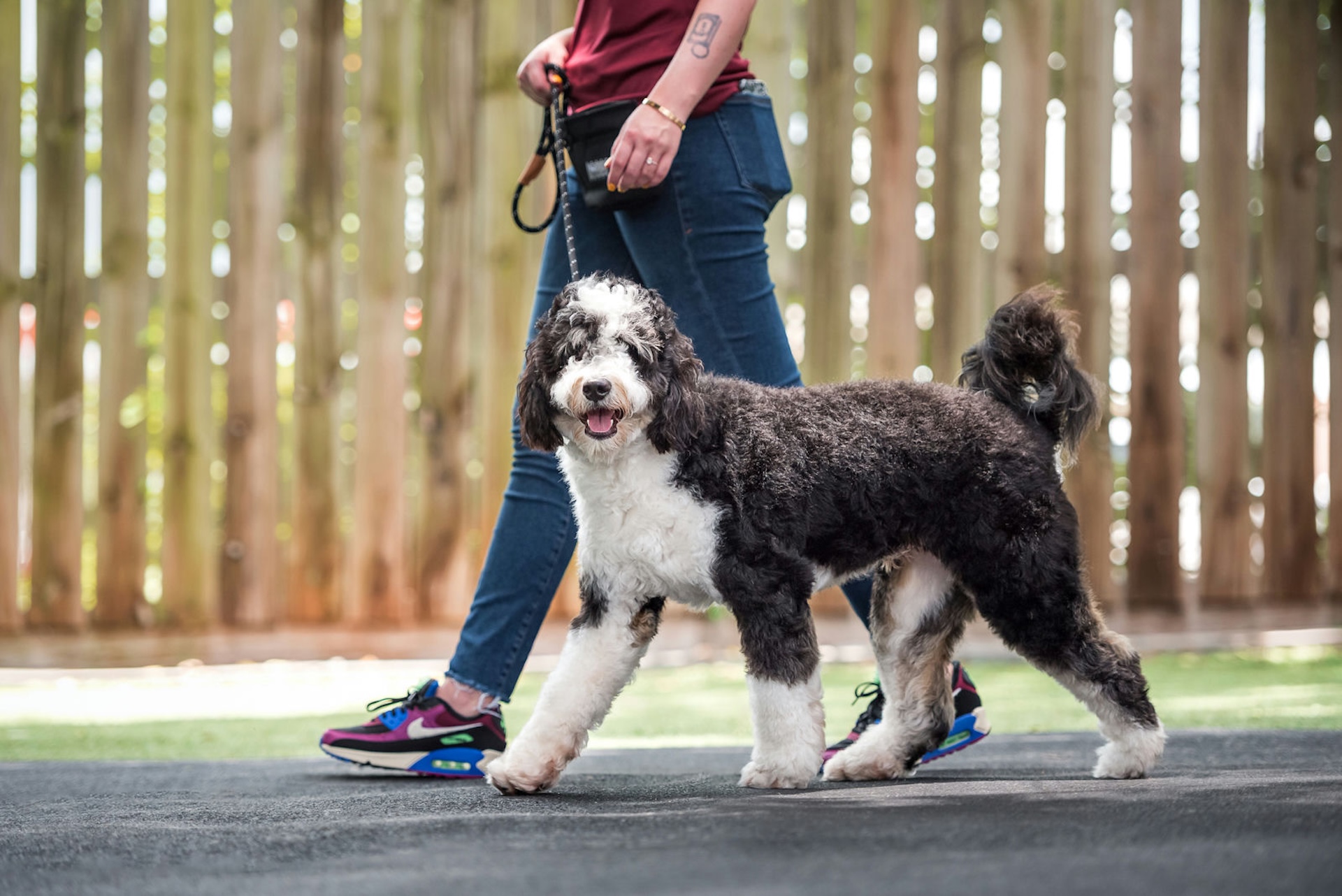

When most people think of dog boarding, they picture a clean, upscale facility where their dog will be safe, happy, and well cared for. But the reality is that a nice facility does not equal a high level of care. And that misunderstanding is where many problems begin.
As a professional dog trainer and behavior expert of 13 years, I've worked with dogs before and after boarding stays; some returning calm and stable, and others coming home overstimulated, anxious, or with entirely new behavioral issues. The difference isn't the aesthetic. It's the standard.
The Industry Gap No One Talks About
Dog boarding is largely unregulated. That means pet facilities can invest heavily in appearance; modern suites, polished branding, luxury upgrades, without necessarily investing in the most important factor: how dogs are actually being handled.
A beautiful lobby doesn't tell you how dogs are being introduced to each other, whether behavior is actively managed, or if the staff understands dog behavior such as stress signals or early signs of escalation. And those are details that matter. High-end boarding should be about intentional structure, not just luxury add-ons.
- Emotional stability over exhaustion
- Controlled interactions instead of chaotic group play
- Individual assessment, not one-size-fits-all care
- Staff trained in behavior, not just supervision
Dogs don't need constant simulation. They need guidance, structure, and the ability to regulate. That's what prevents problems.
The Misconception About “Social” Dogs
One of the biggest misconceptions in the industry is that more socialization is better. Many dogs placed in large, open-play environments are not truly thriving, they're coping. And when that environment lacks structure, it can lead to increased reactivity, poor impulse control, and heightened anxiety. A well-run facility doesn't group dogs for convenience. It makes decisions based on behavior.
How to Recognize True Quality
A high-level facility will feel different the moment you walk in. Not more impressive, but more controlled. You should look for dogs that are calm, not stressed, staff who can clearly and concisely explain behavior (not just services), structured movement (no dogs running freely), and an environment that prioritizes regulation over constant activity. If it looks like nonstop stimulation, that isn't enrichment, it's often stress.
The Aftermath Tells the Truth
The clearest measure of quality isn't what you see during the tour, it's what you see when your dog comes home. A dog from a well-managed environment returns calm, predictable, and behaviorally stable. A dog from an overstimulating environment often returns reactive, restless, and struggles with an “off” switch. The contrast is not subtle.
A Higher Standard
Not every dog is suited for high-volume, socially intense environments, regardless of how they're marketed. At the end of the day, true quality care is about how your dog feels and functions.
Quality care comes at a cost, and it should. Lower-cost, high-volume facilities may charge anywhere from $30–$60 per night, often relying on group play and minimal staffing to manage large numbers of dogs.
More structured, behavior-focused environments typically range from $75–$150 per night, depending on the level of care, expertise, and individualized attention. Keep in mind that you're paying for stability, safety, and long-term behavioral preservation. And that's something a fancy facility alone cannot guarantee.
Part of the team on the floor at Revival Dog Training. Writes occasionally on behavior science, training protocols, and the cases that shape how the practice operates.