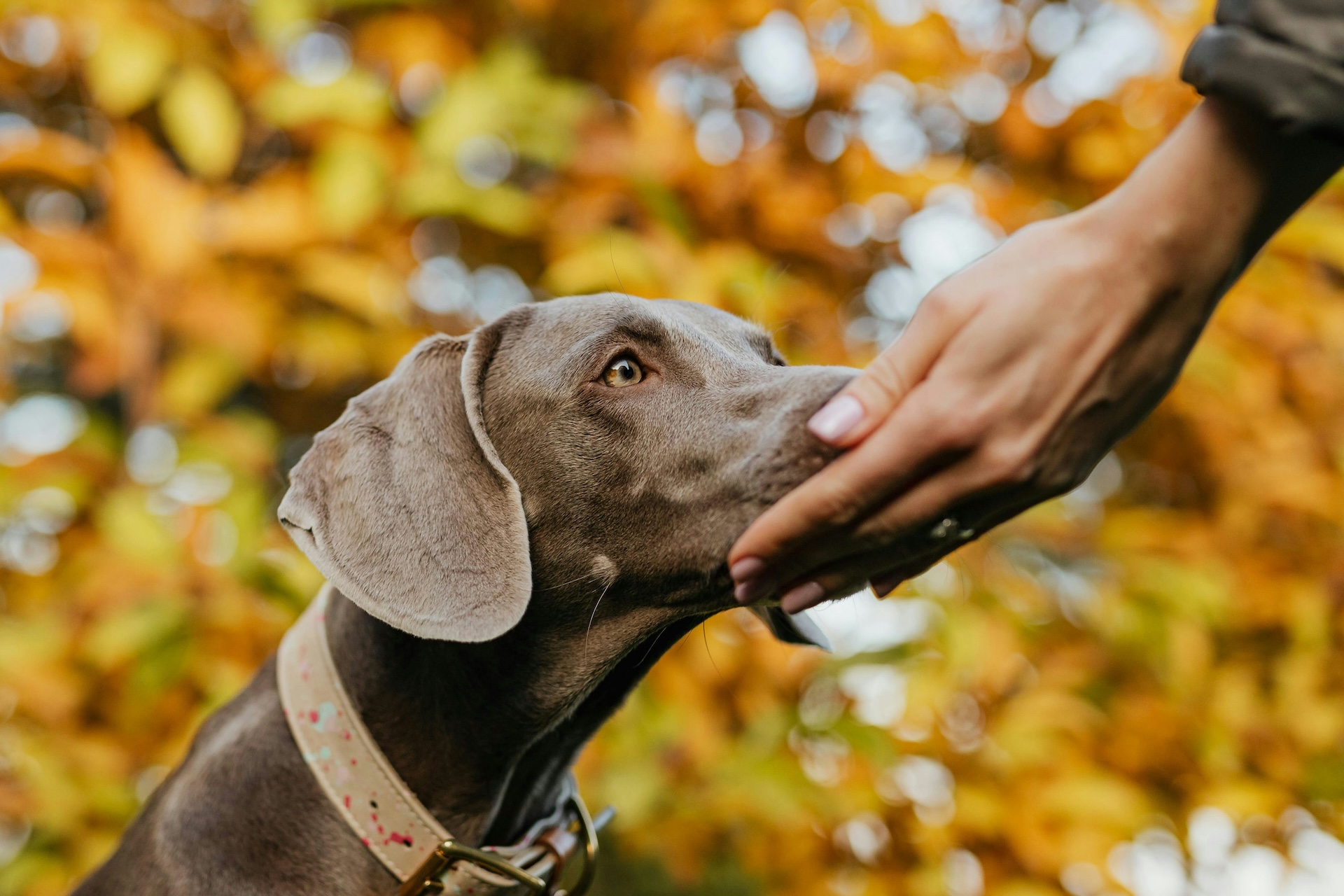
The “touch” cue, where your dog gently bumps their nose to your open palm, is one of the most versatile and beginner-friendly behaviors you can teach. It builds focus, confidence, and a clear way to communicate with your dog in real-life situations.
Why Teach Touch?
Touch is more than a party trick. It gives your dog a clear job to do when they're unsure, overstimulated, or simply need a reset. It's an excellent tool for redirecting attention, moving your dog from one place to another without physical handling, and building cooperative care for vet visits and grooming.
- Redirect attention away from triggers
- Move your dog without using your hands on their body
- Build engagement and check-ins on walks
- Create a calm, confident response under mild stress
How to Train It
Start in a quiet room with no distractions. Hold your open palm a few inches from your dog's nose. Most dogs will naturally investigate. The moment their nose touches your hand, mark it (“yes” or a clicker) and reward with a small treat. Repeat several times, then add the verbal cue “touch” right before presenting your hand.
Once your dog is reliably touching your palm on cue, increase the difficulty: change your position, present your hand at different heights, move to new rooms, then practice outdoors. Keep sessions short, two to three minutes at a time, and end on a success.
Common Mistakes
Don't lure with food in the target hand, the goal is for your dog to target your empty palm. Don't repeat the cue if your dog doesn't respond, instead, make the behavior easier by moving your hand closer or reducing distractions. And don't rush the duration, touch is a quick, snappy behavior, not a sustained one.
Where to Use It
Touch shines in everyday life. Use it to move your dog off the couch, away from the door when guests arrive, or past a trigger on a walk. It's a small skill that quietly becomes one of the most useful tools in your training toolkit.
Part of the team on the floor at Revival Dog Training. Writes occasionally on behavior science, training protocols, and the cases that shape how the practice operates.